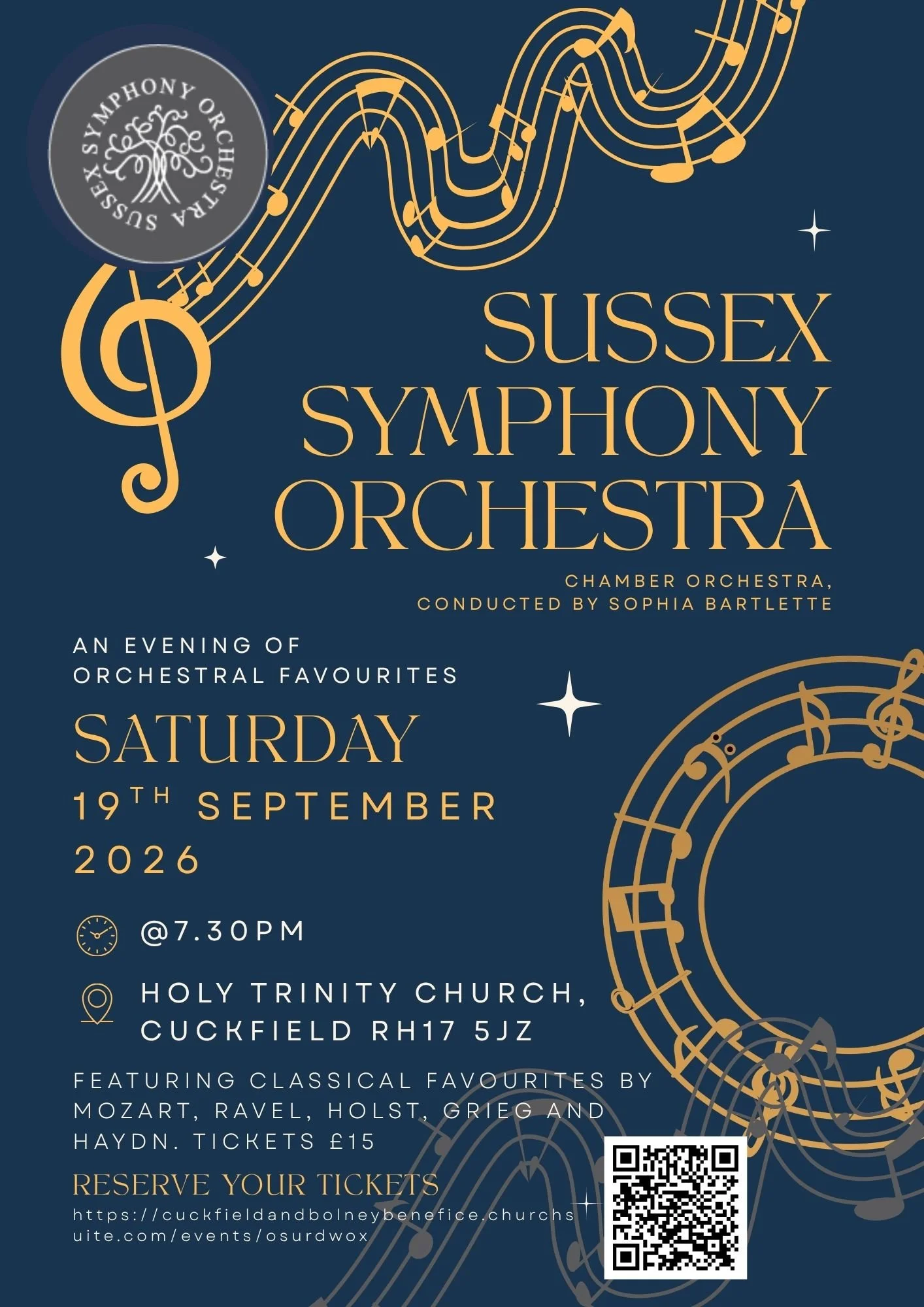
MOZART Overture to The Marriage of Figaro
RAVEL Pavane pour une infante défunte
HOLST St Paul's Suite
GRIEG Peer Gynt Suite – Morning, Anitra's Dance and Ase's Death
HAYDN Symphony No. 94 in G major, "The Surprise"
Join the Sussex Symphony Orchestra Chamber Orchestra for an evening of some of the most beloved works in the orchestral repertoire, from Mozart's sparkling Marriage of Figaro Overture to Haydn's celebrated "Surprise" Symphony.
A musical journey through elegance, nostalgia, mischief and wit.
Wolfgang Amadeus Mozart — Overture to The Marriage of Figaro - 5’
Mozart launches the concert with a burst of comic brilliance: breathless strings, sparkling woodwind and the unmistakable fizz of opera buffa. It’s a curtainraiser that promises intrigue, charm and irresistible momentum. Composed in 1786, The Marriage of Figaro was one of Mozart’s greatest theatrical triumphs. Although the overture contains none of the opera’s themes, it captures its spirit perfectly. Breathless energy, quicksilver changes of mood and sparkling orchestral writing immediately draw the audience into a world of mistaken identities, intrigue and comic confusion.
Maurice Ravel — Pavane pour une infante défunte - 7’
Ravel wrote the Pavane originally for solo piano in 1899 before orchestrating it a decade later. Despite its title, the work is not intended as a funeral lament. Ravel described it simply as an evocation of a slow courtly dance that might once have been performed by a Spanish princess. This piece offers a moment of stillness — a graceful, nostalgic dance imagined for a longago princess. Its luminous simplicity and gentle poise create a quiet, suspended world.
Edvard Grieg — Morning and Åse’s Death from Peer Gynt – 9’
These two movements come from Grieg’s incidental music for Henrik Ibsen’s dramatic poem Peer Gynt. Although they depict very different moments in the story, together they demonstrate Grieg’s gift for vivid musical storytelling. Morning Mood has become one of the most recognizable orchestral miniatures ever written. Beginning with a simple flute melody, the music gradually blossoms into a radiant depiction of sunrise. By contrast, Åse’s Death is deeply personal and understated. Built on quiet string writing and simple harmonies, it portrays the death of Peer Gynt's mother with dignity, tenderness and emotional honesty.
Gustav Holst — St Paul’s Suite - 13’
Written for the school where Holst taught, this suite brims with energy, folktune sparkle and rhythmic bite. Each movement has its own distinctive character, from lively dance rhythms to lyrical melodies inspired by English folk music. The celebrated finale combines the traditional Dargason dance with the familiar tune Greensleeves, weaving the two melodies together with remarkable ingenuity to create one of the most exhilarating conclusions in English string orchestra repertoire.
INTERVAL
Gioachino Rossini – The Barber of Seville Overture - 7’
Rossini’s overture is a masterpiece of theatrical timing. Although it was not originally written specifically for The Barber of Seville, it has become inseparable from the opera and perfectly reflects its wit, vitality and comic exuberance.
Joseph Haydn — Symphony No. 94 “The Surprise” – 27’
Haydn composed the Symphony during his first hugely successful visit to London in 1791–92. Written for enthusiastic public concerts, it demonstrates his ability to combine sophistication with humour and direct audience appeal. The famous unexpected fortissimo chord in the slow movement has delighted listeners for over two centuries, but it represents
only one moment in a symphony full of invention. Elegant melodies, lively rhythmic ideas and
masterful development showcase Haydn at the height of his powers. The joyful finale brings
the evening to an exhilarating close.